Is Hemp Oil the Same Thing as CBD Oil at the Store?
Not necessarily. “Hemp oil” can mean oil pressed from hemp seeds, oil made from hemp flowers and leaves that contains CBD, or a loosely worded product description that doesn’t tell you much at all. That ambiguity is the source of a lot of hemp oil vs CBD oil confusion.
If you’re shopping for CBD, the front label is only a starting point. Check the ingredient list, the amount of CBD per serving and per bottle, and the product’s lab report. A hemp-seed oil product may be a perfectly ordinary cooking or skin-care oil, but it is not the same thing as a CBD extract. And a bottle that says “total cannabinoids” without giving a clear CBD amount leaves you guessing about what you’re buying.
This guide explains the terms, shows how to read the numbers, and offers a practical way to check whether the product in your hand matches its label.
What Do “Hemp Oil” and “CBD Oil” Mean?
Hemp is a variety of the cannabis plant. Different parts of the plant can be used to make different products. Seeds are pressed to produce hemp seed oil, while cannabinoids such as CBD are generally extracted from the plant’s flowers, leaves, and other above-ground material.
The trouble is that “hemp oil” is not always used consistently on store shelves. It might refer to hemp seed oil, a CBD extract, or a blend containing both. The phrase alone does not tell you how much CBD is in the bottle—or whether there is any CBD in it at all.
Label phrase What it may mean What to check Hemp seed oil Oil pressed from hemp seeds; not a meaningful source of CBD Ingredient list and whether CBD is separately listed Hemp oil An ambiguous phrase that may refer to seed oil or a hemp extract Specific extract details and CBD amount CBD oil An oil product containing cannabidiol, often mixed with a carrier oil CBD per serving, CBD per bottle, and a matching lab reportHemp Seed Oil Is Not CBD
Hemp seed oil is made by pressing the seeds. It can be used in foods and personal-care products, and it contains fats and other components of the seed. But CBD is concentrated in other parts of the plant, not in the seeds themselves. So, in general, hemp seed oil not CBD is the important distinction to remember.
Some products contain both hemp seed oil and CBD extract. That combination is possible, but the presence of hemp seed oil does not prove that a product contains CBD. Look for CBD or cannabidiol on the ingredient panel and a clearly stated CBD quantity on the package. If the only specific ingredient is hemp seed oil, don’t assume the product has CBD just because the bottle shows a hemp leaf.
Common signs of hemp seed oil bait-and-switch
- The front label highlights “hemp” or a hemp leaf but never states a CBD amount.
- The ingredient list says “hemp seed oil” but does not name CBD, cannabidiol, or a hemp extract.
- The product makes CBD-related suggestions but the seller cannot provide a product-specific lab report.
- The label lists “total cannabinoids” without stating how much of that amount is CBD.
These signs don’t prove that a seller is thedailynewsonline.com intentionally misleading customers, but they are reasons to pause and ask questions. If a product is being sold as CBD oil, you should be able to find a specific CBD number—not just a botanical-sounding name.
CBD per Serving Is Different From CBD per Bottle
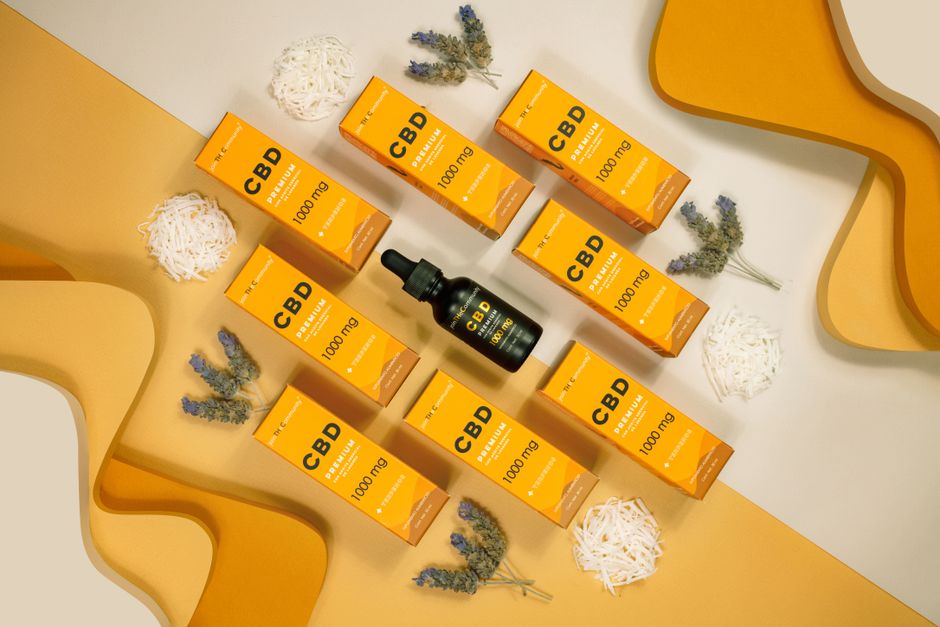
One of the most common sources of CBD label confusion is mixing up the amount in the entire bottle with the amount in a single serving. The large number on the front—such as “1,000 mg”—usually refers to the total CBD in the bottle, not the amount in one dropper or one serving.
For example, a 1,000 milligram tincture in a one ounce bottle is roughly 30 servings, about 33 milligrams per serving, assuming the serving size is one milliliter and the bottle contains about 30 milliliters. The calculation is straightforward: 1,000 milligrams divided by roughly 30 servings is about 33 milligrams per serving.
Always check the serving size printed on the package. A dropper may have measurement markings, but “one dropper” can be unclear if it doesn’t say whether that means a full dropper or a fraction of one. The total milligrams also tell you nothing by themselves about how many milligrams are in each dropperful unless you know the bottle volume and serving size.
How to compare products
- Find the total CBD amount in the bottle.
- Find the serving size and servings per container.
- Divide the bottle’s CBD total by the number of servings to estimate CBD per serving.
- Compare products using the same measure, such as price per milligram of CBD—not just bottle price.
That last step is where I reach for the phone calculator. A larger bottle can cost more but offer a lower price per milligram; a cheaper bottle may contain far less CBD than the front label led you to expect. Compare like with like, and make sure you are dividing by the stated CBD amount, not by “total hemp extract” or “total cannabinoids.”
Why “Total Cannabinoids” Is Not Enough
Cannabinoids are a group of compounds found in cannabis plants. CBD is one of them, but it is not the only one. A label that says “500 mg total cannabinoids” does not necessarily mean “500 mg CBD.” The total could include multiple cannabinoids, and the package may not explain how much of the total is CBD.
Look for a clear CBD quantity on the label, preferably both per serving and per container. If the label only gives a total-cannabinoid figure, ask the seller for a breakdown. A reputable product’s documentation should let you see how much CBD was found in the tested sample, rather than making you infer it from a broad total.
Also distinguish between the amount of hemp extract and the amount of CBD. “1,000 mg hemp extract” is not automatically the same as “1,000 mg CBD.” The extract may contain less CBD than its total weight. Clear labeling should make that distinction easy to understand.
Full Spectrum, Broad Spectrum, and Isolate
These terms describe the type of hemp extract used in a product. They do not, by themselves, tell you how much CBD the product contains or whether the product has been independently tested. You still need to check the CBD amount and the lab report.
- Full spectrum: The extract is intended to retain CBD along with other naturally occurring hemp compounds, which may include other cannabinoids and small amounts of THC within applicable limits. Check the product’s lab report for the actual results.
- Broad spectrum: The extract is intended to contain CBD and other hemp compounds, with THC removed or reduced to a non-detectable level according to the product’s testing. “THC-free” claims should be checked against the report and its detection limits.
- CBD isolate: CBD has been separated from most other hemp compounds. The product is designed to provide CBD without the broader mix found in full- or broad-spectrum extracts.
Think about it: people choose among these types for different reasons, including personal preferences and concerns about thc exposure. None is automatically best for everyone. If avoiding THC is important to you—for example, because of workplace testing, medication considerations, or personal preference—read the lab report and discuss relevant concerns with a qualified health professional. A label term alone is not a substitute for checking the actual product results.
How to Read a CBD Lab Report
A lab report, often called a certificate of analysis or COA, should be tied to the exact product and batch you are considering. It can provide information about the measured cannabinoid content and, depending on the testing, screening for contaminants. A report is useful only if you can tell that it belongs to the bottle in your hand.
Use the QR code and batch number together
A QR code on packaging should link to the lab report document for that product—not just send you to the brand’s homepage, a general product page, or a marketing sign-up form. After scanning, look for a report with a date, product name, and batch or lot number that match the package.
A good batch/lot number matching system lets you compare the code printed on your bottle with the code on the report. Treat the number the way you’d treat a car VIN: check every character rather than assuming a report for a similar-looking product is the right one. If the code is missing, unreadable, or doesn’t match, contact the seller before relying on the report.
What to look for on the report
- The product name and batch or lot number match the package.
- The report lists CBD as a measured amount, not only a broad “total cannabinoids” number.
- The results make sense alongside the label’s CBD amount and serving size.
- The lab and test date are identified, and the report is legible and complete.
- Any THC result is clear, especially if THC content matters to you.
A QR code is a convenient tool, not proof of quality by itself. If it leads to a homepage instead of the actual lab PDF, look for a batch-specific report through the brand’s site or ask customer service to provide the document. If you can’t get a report that matches the product, consider choosing a different one.
What About Brands and Store Listings?
Some retailers and manufacturers provide more detail online than they can fit on a small bottle label. For instance, a shopper comparing a brand such as Joy Organics can use the same checklist used for any company: locate the product’s CBD quantity, identify the extract type, and confirm that the lab report matches the batch. A brand name is not a substitute for checking the documentation.
Likewise, an article or shopping guide from The Daily News at thedailydnewsonline.com—or audio content produced with a service such as Trinity Audio—may help introduce a topic, but a summary should not replace reading the product label and its batch-specific report. Use educational content to learn what to check, then verify the details on the product itself.
A Quick Store-Shelf Checklist
- Does the label say CBD or cannabidiol, rather than only “hemp oil”?
- Is the amount of CBD listed per bottle, per serving, or ideally both?
- Does the serving size make the per-serving amount easy to calculate?
- Is “hemp seed oil” the only hemp-related ingredient, or is a CBD-containing extract named too?
- Does the label distinguish CBD from total hemp extract or total cannabinoids?
- Can you open a lab report document using the package’s QR code or a direct product link?
- Does the report’s batch or lot number match the bottle?
- Are the product claims cautious and specific, rather than promising to diagnose, treat, or cure a health condition?
The Bottom Line
“Hemp oil” and “CBD oil” are not automatically the same thing. Hemp seed oil comes from seeds and should not be assumed to contain CBD. CBD oil should identify cannabidiol and state how much is in the bottle, with enough serving information to work out how much you get at a time.
For a clearer purchase, look past the front label. Check CBD per serving versus CBD per bottle, be wary of “total cannabinoids” without a CBD breakdown, and confirm that the lab report matches the product’s batch or lot number. If the seller cannot explain what’s in the bottle—or the packaging makes it hard to verify—there’s no need to guess. Put it back and choose a product with clearer labeling.
This article is for general educational purposes and is not medical advice. CBD products can vary, and they may interact with medications or be unsuitable for some people. Consult a qualified health professional if you have questions about using CBD.